
| The HarpGear Standard |
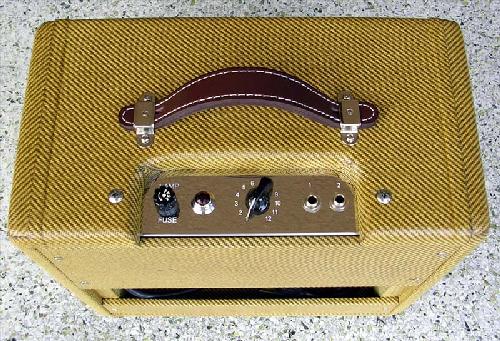
| The HarpGear Standard: The HarpGear Standard is the model that started it all. It uses a vintage style steel chassis with a high polish chrome finish and high quality silk screened graphics just like the original we all love. This amp has a stock 5F1 style circuit with an oversized output transformer and key component changes to make the amp have great bass response and all the grunt and growl you could ever want from an amp. This amp uses Sprague Atom capacitors, Orange Drop Tone capacitors and carbon comp resistors throughout for a vintage tone. This amp was the first amp HarpGear offered and has had great success with players from beginner to professional. This amp will give you a great chicago style blues tone. The distortion increases as you turn the amp up. The tube configuration for this amp is as follows: (1) 6V6GT power tube (1) 5Y3GT rectifier tube (1) 12AY7 preamp tube. This amp will generate between 5-7 watts of power which comes across suprisingly loud. Players use this amp for small to medium gigs with great success with no assistance. This amp can easily be used for large venues by connecting the line out to the PA and you will get the same great tone the amp is known for as loud as you or the soundman would like. This allows you to use the amp as a monitor and the PA to get you heard over the rest of the band. Price $670 Click here to see Dennis Gruenling playing through an HG Standard. Click here for Quicktime Video Clip 30 Meg Click here for Realplayer Video Clip 3 Meg Click here to see Adam Gussow of Satan and Adam playing Thunky Fing through an HG Standard. Click here for Quicktime Video Clip 40 Meg Click here for the Real Video Clip 4 Meg Click here to see a new clip of Dennis Gruenling playing through an HG Standard. Click here for Quicktime Video Clip 28 Meg Click here for the RealPlayer Video Clip 3 Meg Click here to see Jason Ricci playing through an HG Standard. Click here for Realplayer Video Clip 1 Meg "This is the best sounding custom rig I have ever heard." -Jason Ricci Click here to see Michael Peloquin playing through an HG Standard. Click here for Realplayer Video Clip 1 Meg Click here to hear Chris Michalek playing through an HG Standard. Click here for MP3 2 Meg As always this amp includes the following high quality features: -Solid
void free pine finger jointed lacquered cabinet.
-Solid 3/8" Baltic birch baffle for the best sound reproduction. The baffle acts just like the sound board on a guitar and unlike particle board baffles which absorb the tone the Baltic birch reproduces your tone accurately. -Mercury Magnetics Tone Clone Transformers which are authentic reproductions of original transformers for a truly vintage sound as well as oversized transformers to add more honk to your amp and give you plenty of sweet round distortion. -Mil Spec G10 Garrolite eyelet boards to prevent both tweed disease and moisture absorption common on pressed fiber boards which produces false capacitance and causes crackle and hum. You will not have that problem with our boards and they will last a lifetime. -Highest quality components including Sprague Atoms capacitors, Xicon Capacitors, Sprague Orange Drop or Mallory 150 tone caps, phenolic sockets, switchcraft jacks and Mercury Magnetics transformers. -All amplifiers are hand wired one at a time with the utmost attention to detail. All components on the board are raised slightly to prevent component rattle and help with cooling. All component leads are straightened and cleaned before the are soldered to the G10 board. -Values of components are increased in key areas to make the amplifier more responsive with all the bass and crunch a harp player needs. -Weber VST speakers and Jensen vintage speakers available in both ceramic and alnico to fit your playing style. -The option of having current production tubes or NOS tubes. -An additional line out jack to run to the PA so you will never have a problem being heard over the rest of the band. You can still use your amp as a monitor to hear yourself while plugged into the PA. The line out can also be used to record directly into your computer line in or into a sound board. |
Please feel free to contact me and discuss your playing style as there are options which can be customized to enhance your sound. These amplifiers can be fitted with international power supplies also to allow overseas customers to use them also. The base price for Harpgear amplifiers is $650 plus shipping. The price may go up or down depending on the options you choose. Please feel free to contact me with any questions you may have.
Brian Purdy
brian@harpgear.com
352-817-3679